


Holiday on the Wadden Sea
The Wadden Sea is one of the most important wetlands in the world, full of life in the air, mudflats and water. The area stretches along the North Sea coast from southern Denmark in the north in a south-westerly direction along the north German coast to the Netherlands and covers a coastline of over 500 kilometres.
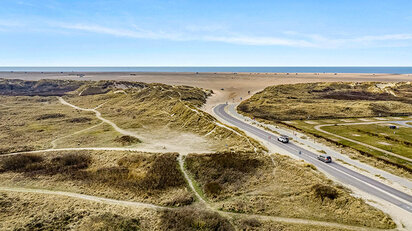
Lakolk Beach on the island of Römö in the Danish Wadden Sea
Many holiday home guests travel to the Wadden Sea coast in southern Denmark every year. A landscape characterised by high and low tides that offers plenty of relaxation and great nature experiences for young and old at any time of year. Because the Holiday homes in Denmark, especially in the southern region here on the North Sea, are an ideal destination for experiencing the Wadden Sea and its vibrant nature up close.
What is the Wadden Sea?
The Wadden Sea is a stretch of coastline that is strongly influenced by the tides. The low tide caused by low tide (outgoing water) exposes the seabed of the North Sea, which is known as mudflats. The mudflats are a habitat for a variety of plants, animals and microorganisms and serves as a resting place and food source for many birds and fish.
The Wadden Sea on the North Sea coast is the largest Wadden Sea in the world with a total area of around 11,500 square kilometres. There are more than 30 islands in front of the entire area, of which only 3 are in Denmark: Island of Römö, Mandø and Fanö.
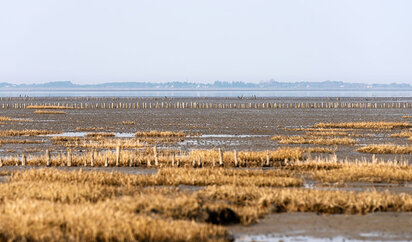
Low tide and high tide characterise the landscape in the Wadden Sea
Within 24 hours there are two Ebb and flow, which is characterised by low and Hoch water. During low tide, the water recedes very far. Large parts of the seabed between the coast and the islands are then exposed, the mudflats.
This is made possible by a very slight gradient in the seabed of less than one metre over a width of one kilometre. A further condition must be met: The difference between the Hoch and low water must be at least two metres.
The moon controls the Wadden Sea
The moon and the earth attract each other, this force is called gravitational force. It is greater than the centrifugal force and pulls the water towards the moon. This is because the moon acts like a magnet, so that the gravitational force creates a flood mountain on the side facing the moon.
The centrifugal force of the earth's rotation also plays a role; it dominates on the side facing away from the moon and also causes a tidal peak to form there.
This interplay of gravitational and centrifugal forces creates high and low tides twice a day, which in the particularly shallow North Sea coastal region of Esbjerg in Denmark to Den Helder in the Netherlands forms one of the most impressive natural landscapes in the world – the Wadden Sea.
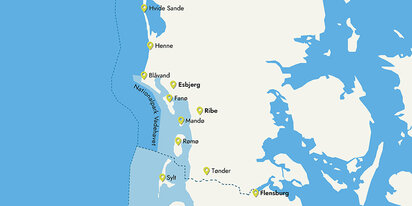
The Danish Wadden Sea National Park
The Danish Wadden Sea National Park with its offshore islands Römö, Mandö and Fanö, The region is unique in the world in terms of biodiversity and ecological processes.
“Vadehavet National Park” includes the Danish Wadden Sea, the Wadden Sea islands of Römö, Mandö and Fanö as well as the Skallingen peninsula, the Varde river valley, the Marbæk area and parts of the marshland behind the dikes on the South Jutland mainland (Tjæreborg Marsh, Ribemarsch, Margrethe-Kog and the outer kogs in Tøndermarsch).
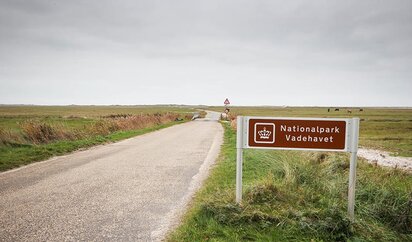
The Skallingen peninsula forms the northern end of the Wadden Sea National Park
This area has been recognised by UNESCO as a World Heritage Site, giving it the same status as the Great Barrier Reef off Australia or Yellowstone National Park in the USA.
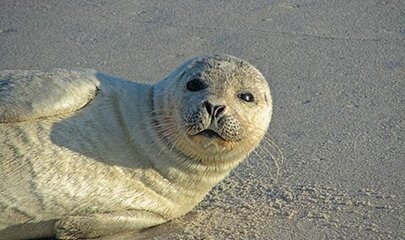
Nowhere else in Denmark are so many birds to be seen during spring and autumn migration. The enormous plant production and the daily tidal shifts create a breeding ground for rich life in the mudflats. Each square metre is home to up to 100,000 shrimps, worms, snails and mussels. This enormous food supply in turn feeds the numerous birds, fish and Harbour seals (seals).
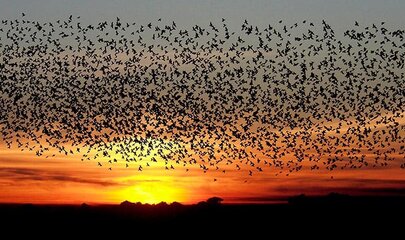
The migration of the starlings, the black sun, Danish "Sort Sol”, is the most famous bird migration. But the large flocks of swans and geese are also impressive.

The marshes of the Wadden Sea are an important resting place for many migratory birds in spring and autumn.
The plants in the Wadden Sea must also be able to tolerate large amounts of salt. Probably the best-known plant in the Wadden Sea is the marsh samphire, Danish. “Salturt“, also known as sea asparagus. It grows from April to October just below the Hoch waterline and is washed over twice a day by the sea water.
Sea asparagus can be eaten raw and has a slightly salty flavour. Sea samphire has a very high content of nutrients and minerals and is therefore very healthy. This plant can be found everywhere in the Danish Wadden Sea.
In the Wadden Sea National Park, people have been living in a unique interaction with nature for centuries. Life has adapted to nature. Dykes have been built and houses and farms have been constructed on a higher surrounding level. Nevertheless, the dangers of storm surges are omnipresent.
Islands in the Danish Wadden Sea
Together with the islands of Fanö, Römö, Mandö and the Skallingen peninsula, the Danish part of the Wadden Sea was declared a national park on 16 October 2010. In Denmark, the Wadden Sea covers an area of 1,500 square kilometres. Around 300 km² of this is land.
Römö
Römö is the largest island in the Danish Wadden Sea and has an area of 128.86 km². The island lies about 10 kilometres off the Danish coast and is connected to the mainland by a 9.2 kilometre long causeway. The highest point on Römö is Høstbjerg with a height of 19 metres.
Fanö
Fanö is the second largest island in the Danish Wadden Sea and is located directly in front of Esbjerg and north of Mandö, with an area of 56 km². The island can be reached by ferry from Esbjerg. Fanø has a 15 km long and 1 km wide bathing beach on its western side. You can find more information about the island of Fanö here. (not linked)
Mandö
Mandö is the smallest island in the Danish Wadden Sea between Römö and Fanö, with an area of 7.63 km². The island is connected to the mainland by a 6 km long dirt track. The path can only be used at low tide. You can find the tide table here.
Holiday in a holiday home on the Wadden Sea
Esmark rents out beautiful holiday homes in Denmark via 5874, many of which are located directly on the Wadden Sea in the most popular holiday resorts in Southern Jutland.
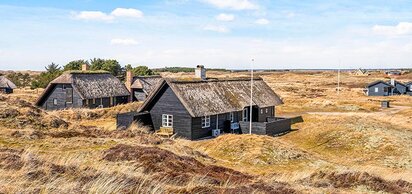
Esmark rents out many cosy holiday homes by the Wadden Sea in Denmark
Mainland Region South Jutland
Danish Wadden Sea Islands
Even beyond the Wadden Sea National Park, along the Danish west coast up to Thorsminde, north of Söndervig, you will find a large selection of holiday homes in various price ranges at Esmark. Whether hyggelig-classic for 4-6 people with a fireplace and sauna or luxurious with your own Swimming pool, whirlpool or activity room for groups of up to 30 people.
Protecting the Wadden Sea
The Netherlands, Germany and Denmark have been working together to protect the Wadden Sea since 1978, under the name Trilateral Wadden Sea Cooperation (TWSC), together. The joint signing of the Declaration on the Protection of the Wadden Sea took place in 1982 and was updated in 2010.
The Commission, which brings together politics, science, administration and regional interest groups, has been able to acquire a wealth of knowledge and experience over the course of time. Its objectives are the protection and conservation of the Wadden Sea and the sustainable development of the Wadden Sea region.
This international cooperation created the conditions for the Wadden Sea region to be listed as a UNESCO World Heritage Site on 23 June 2014.
The protection of the Wadden Sea is essential to preserve global biodiversity.
Vadehavscentret, the gateway to the UNESCO World Heritage Site
The Wadden Sea Centre, newly renovated in 2017 (dan. Vadehavscentret) south of Ribe is the gateway to the UNESCO World Heritage Site. In the 1,000 m2 exhibition, will The tour provides a lot of knowledge and understanding of the Wadden Sea and its flora and fauna.
The Wadden Sea Centre also offers the opportunity to book guided tours Mudflat hikes, safaris to the black sun (Danish sort sol) or book oyster tours with experienced nature guides. Find out more about the Wadden Sea Centre.
Follow Esmark
Follow Esmark on Facebook and Instagram! We keep you updated on new holiday homes, competitions, photos, news from the holiday coast, and much more.


Esmark Newsletter - become VIP
Get our newsletters with exciting travel tips and great offers on holiday home vacations in Denmark. Every 3 months, we draw a winner for an Esmark gift card worth DKK 3,500 among all recipients.